A Day in the Villages of His Ancestors
Tracing an American’s Alsatian Roots: A Day in the Villages of His Ancestors
I had the pleasure of accompanying an American couple on a journey through Alsace to explore the places connected with the husband, Glenn’s, family history. The day was divided into two parts: a morning devoted to the villages, churches, cemetery, and ancestral home of Glenn’s family, followed by an afternoon spent meeting a newly identified cousin and discovering the family’s connection to Alsatian winegrowing.
In the footsteps of the family: Blienschwiller and Nothalten
Our morning took us to two beautiful villages along the Alsace Wine Route: Blienschwiller and Nothalten.
Both villages played an important role in the religious and family history of Glenn’s ancestors. For generations, members of his family were baptized, married, and buried in the Catholic churches of these villages.
Our first stop was the church in Blienschwiller, where we had the opportunity to see — and hear — something truly remarkable: a bell dating from 1472.
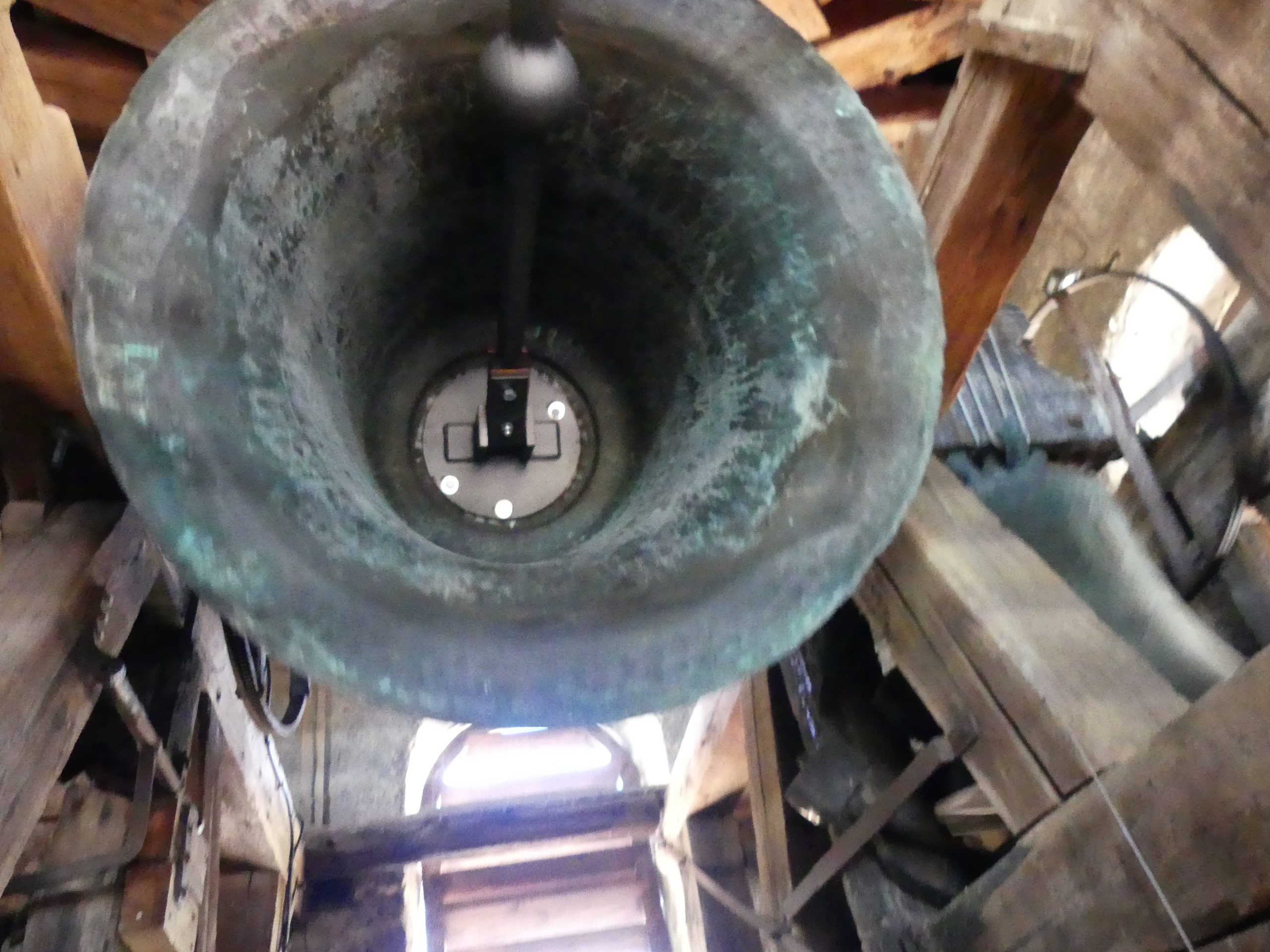
By a particularly happy coincidence, this ancient bell rang on the occasion of the arrival in France of Pope Leo XIV. Born in Chicago, Leo XIV is the first American pope, making this unexpected connection between a centuries-old Alsatian bell and an American pope a particularly memorable moment for our American visitors.
We then continued to Nothalten, another village closely connected with Glenn’s family.
The two churches are Catholic, but there is an important historical detail to understand. The present church in Nothalten was not built until 1852. Before that time, the Catholic inhabitants of Nothalten attended church in neighboring Blienschwiller.
A visit to the Nothalten cemetery
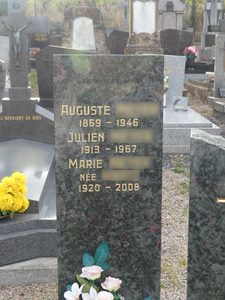
Our morning also included a visit to the Nothalten cemetery, where members of Glenn’s family are buried.
Standing among the graves of people whose names had previously appeared only in genealogical records creates a very different connection with the past. Names and dates suddenly become tangible: these were people who lived, worked, raised families, and were part of the same village community that we were visiting
Parish Records in Nothalten
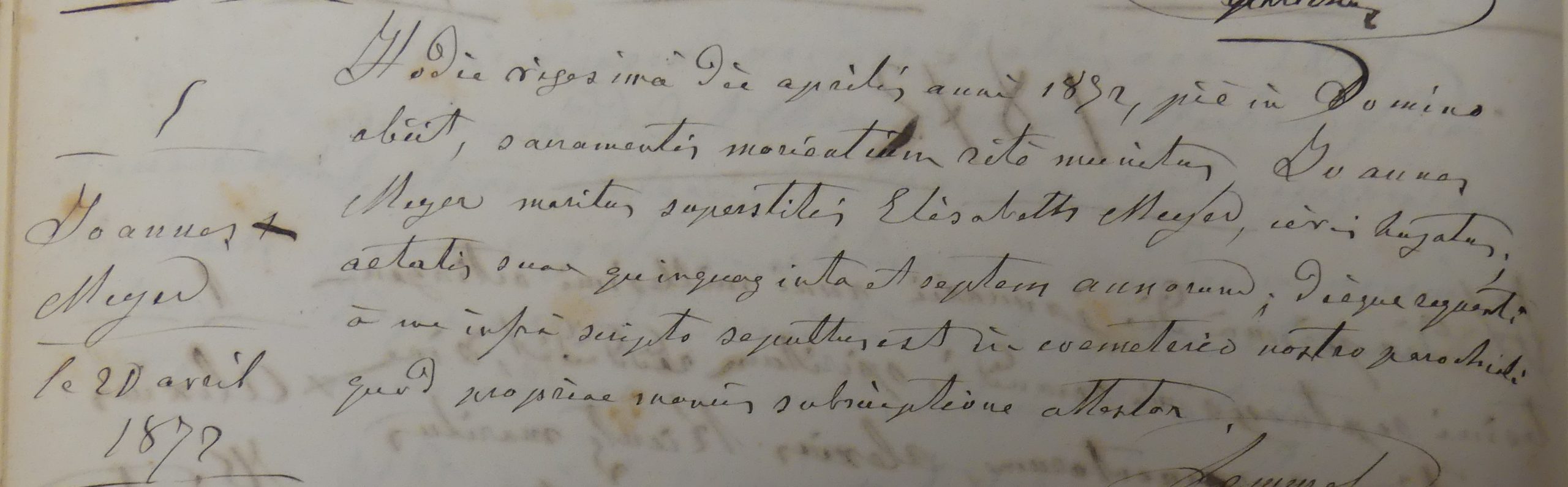
Another particularly moving moment came when we were able to see the marriage and death records of Glenn’s great-great-great-grandparents, Jean and Lisette, who married in 1860.
Jean died in 1872, and Lisette in 1875. Seeing the original records that document their lives, more than 150 years later, brought a very personal dimension to the research.
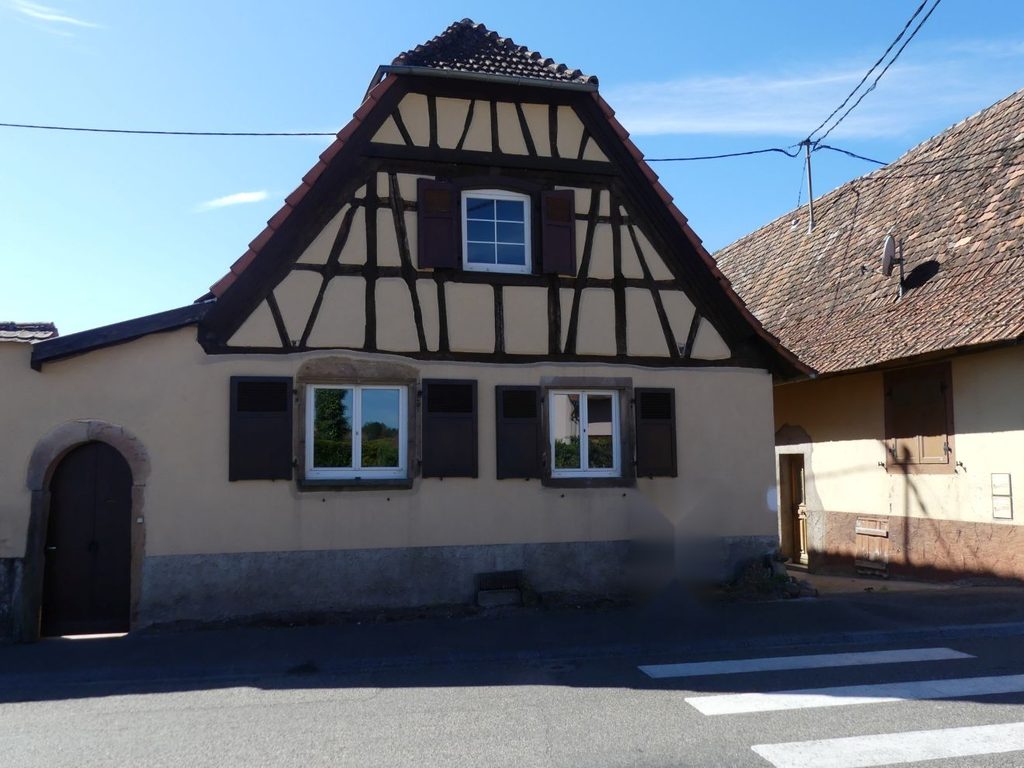
Finding the house where Jean and Lisette lived
We ended the morning by standing in front of the house where Jean and Lisette lived with their children, including their son Jacques (1867-1933)
Jean, his father, and Lisette’s father were all winegrowers, reflecting the deep connection of the family to the vineyards and winegrowing traditions of Nothalten.
Jacques plays a particularly important role in Glenn’s family history: he is the ancestor who emigrated to the United States, thereby creating the link between this small Alsatian village and Glenn’s American family today.
Locating this house was not simply a matter of finding an address in a modern directory. It was the result of detailed research into land records and historical notarial deeds.
The land records made it possible to follow the property through time, while the notarial documents provided additional evidence concerning ownership and transactions. By combining these sources, I was able to identify the location of the family home.
Meeting a newly identified cousin
We met Patrick, a cousin of Glenn, together with two of Patrick’s daughters, and enjoyed lunch together at an Alsatian restaurant.
This meeting was made possible by the genealogical research that established and confirmed the family relationship between Patrick and Glenn. They are third cousins, once removed, from two branches of the same family that had become separated by emigration and the passage of generations.
And what better dish for such a meeting than baeckeoffe?
Baeckeoffe is one of Alsace’s best-known traditional dishes: a slow-cooked casserole of potatoes, onions, and several types of meat, traditionally marinated in Alsatian white wine and cooked slowly in a covered ceramic terrine. It is a hearty, generous dish that is particularly appropriate for a long family lunch!
From genealogy to the Alsatian vineyards
After lunch, our conversation continued as Patrick showed us his winegrowing estate.
He took us through several parcels of his vineyard and explained something of his work as a winegrower. This was another wonderful connection between family history and the living traditions of Alsace.
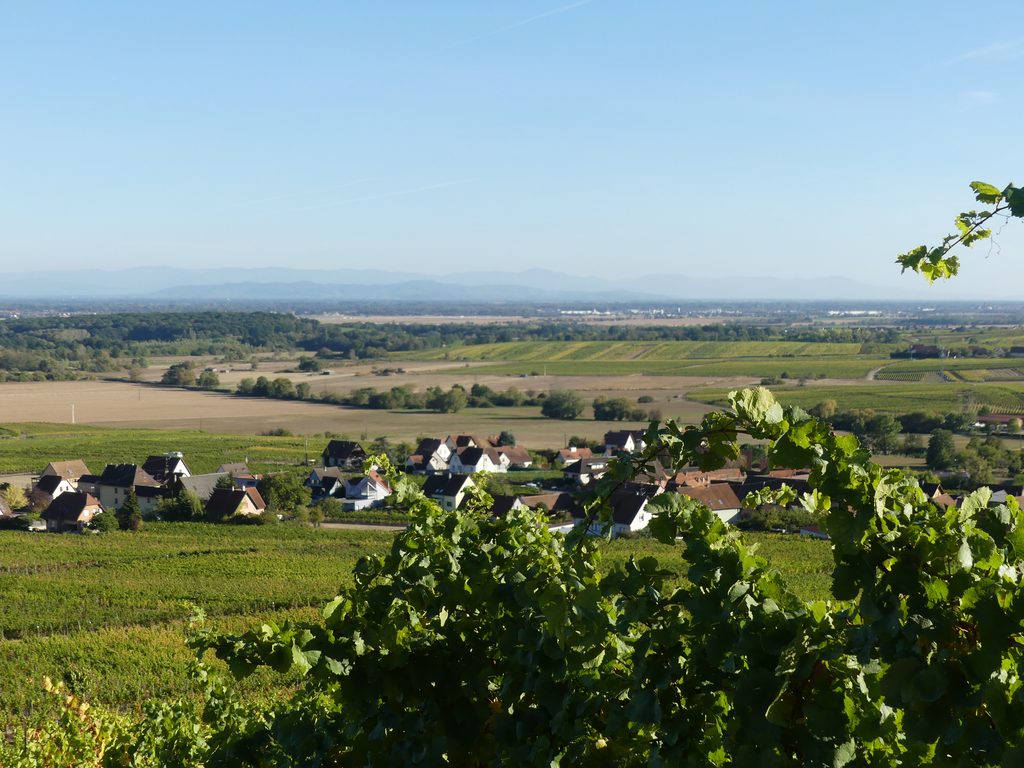
The day ended at a magnificent viewpoint overlooking Nothalten and the Alsatian plain.
From this elevated viewpoint, we could look across the vineyards and villages of Alsace toward the distant Black Forest, the mountainous region of southwestern Germany that rises beyond the Rhine and faces the Vosges Mountains.